
Motion sensor
Detects movement inside its coverage area while the system is armed. Placement depends on corridors and site conditions.
We review entrances, corridors and how the site is used, then plan motion sensors, door contacts, sirens and alert methods, followed by zone-by-zone testing before handover.
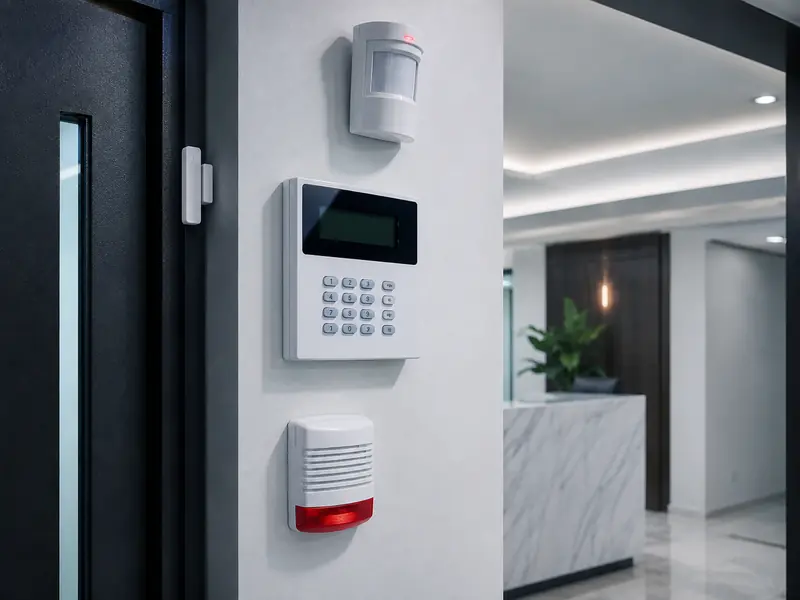
A shop, warehouse, villa and office do not need the same number or placement of sensors, so we start with real entry and movement points.
We do not add sensors without a reason; every point is selected according to risk and how the location is used.
Detects movement inside its coverage area while the system is armed. Placement depends on corridors and site conditions.
Monitors an entry point while armed and can identify the triggered zone when supported by the alarm platform.
Receives sensor signals and manages zones, arming, delays and the way alarms are triggered.
Provides an audible alarm according to configuration and may be installed indoors or outdoors depending on the project.
Used to arm and disarm the system and manage zones using the control methods supported by the selected platform.
Some systems support an app or communications module. This requirement is confirmed before hardware is selected.
Sensor type, position and configuration matter. Poor placement may create unwanted alerts or leave an important area uncovered.
This page covers burglary and intrusion alarm functions such as motion and opening detection. Smoke, heat and fire-alarm systems use separate devices and system design, so they are handled as a different service.
The goal is to hand over a system where every sensor works in the right place and the user understands arming and alerts.
We review entrances, corridors, spaces and how the location is used.
We choose motion and door sensors plus alarm-panel and siren locations.
Devices and required wiring or compatible wireless units are installed according to the design.
Zones, delays and alert behavior are configured and each sensor is tested individually.
We explain basic arming, disarming and alarm indications to the responsible user.
A site may also need CCTV, access control or a separate fire-alarm system, but each platform is selected for its actual purpose.
App features, battery support and communication modules vary by model; compatibility and functions are confirmed before supply and installation.
An intrusion alarm monitors movement and the opening of doors or windows for unauthorized entry, while a fire alarm uses dedicated smoke or heat detection. They use different devices and system designs.
Sensor locations are selected after reviewing entrances, corridors and movement areas, while avoiding positions that may cause unwanted alerts where possible.
Yes when door or window contacts are assigned to clear zones. The way the event is displayed depends on the alarm panel and configuration.
Many alarm panels support backup batteries, but runtime depends on battery capacity, condition and connected devices. This is verified during system design.
Some systems support an app, notifications or a communication module. We confirm this requirement before selecting the alarm platform.
Send us the site type, number of entrances and how it is used, and we can arrange a survey to define sensors, zones and the right alert method.