
Audio zones
Identify halls, corridors, offices, classrooms, prayer areas or outdoor spaces, and whether each area needs independent control.
A good system starts with the site and how it will be used—not simply the number of speakers. This guide helps define audio zones, speaker types, amplifier capacity, sources and cabling before equipment is approved.
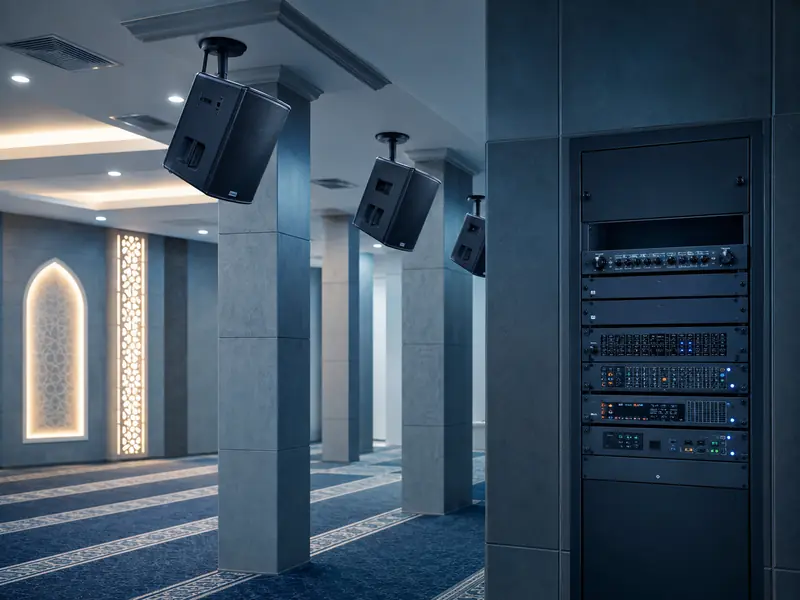
Defining how the system will be used and where sound is required helps avoid random equipment choices and supports easier day-to-day operation and future expansion.
Identify halls, corridors, offices, classrooms, prayer areas or outdoor spaces, and whether each area needs independent control.
Announcements, lectures, calls to prayer, background music or meetings can require different speakers, sources and microphone arrangements.
Consider the required sound level and normal site noise so the system is neither oversized nor underpowered for the real use case.
These questions should be answered before deciding speaker quantity or amplifier size.
| Factor | Question to answer | Why it matters |
|---|---|---|
| Zones | How many areas need sound, and should they be controlled independently? | Defines zoning, control and output requirements. |
| Speakers | Will speakers be ceiling-mounted, wall-mounted or outdoors? | Affects speaker type, coverage and installation method. |
| Sources | Do you need microphones, a player or multiple sources? | Defines inputs, mixing and daily operation. |
| Cabling | Is the site new or finished, and are suitable cable routes available? | Shapes installation planning and reduces late changes. |
| Expansion | Could more zones or speakers be added later? | Helps choose suitable capacity instead of rebuilding the system later. |
Speakers, amplifier, sources and wiring must work as one compatible system, so purchasing decisions should not rely on quantity or a single power rating.
There is no single speaker type for every space. Coverage, environment and the physical layout should guide the choice.
Before selecting an amplifier, review speaker data, zones, wiring method and required sources, then confirm compatibility and capacity.
It should be based on speaker quantity, ratings and wiring method with a suitable operating margin—not simply the highest number on the specification sheet.
Define microphone count, players, required inputs and how sources should be mixed or prioritized before choosing the equipment.
For multi-area sites, confirm that the selected platform supports the required zoning and control method before installation.
Review spaces, heights, normal noise, cable routes and user locations.
Set audio zones, control method and required sources for each area.
Choose speakers, amplifier, microphones and sources after compatibility review.
Complete cabling and mounting, then adjust levels and settings to the approved plan.
Test each zone, source and microphone and explain normal operation before handover.
Weak audio does not always mean the whole system must be replaced. A survey can identify whether the issue is layout, speakers, amplifier, sources or cabling.
The cause may be speaker layout or level adjustment rather than total system power.
Expanded use may require additional mixing, amplification or control after compatibility is checked.
Part of the infrastructure can sometimes remain in service if the existing cabling and components pass inspection.
Start with the site type, the areas that need sound, daily use and required coverage, then select speakers, amplifier capacity and sources around those requirements.
Speaker choice depends on mounting location, coverage pattern, indoor or outdoor conditions and the intended use, so ceiling, wall and outdoor speakers suit different situations.
Capacity is selected after reviewing speaker quantity, speaker ratings, wiring method and required zones with a suitable operating margin, while confirming component compatibility before installation.
Yes when the selected equipment supports zoning. Independent areas can be planned by floor, department or use case according to the site requirements.
If the core infrastructure, cabling and some components remain suitable, selected parts may be upgraded after checking speakers, amplifier, sources, compatibility and required capacity.
Send us the site type, number of zones and intended use. We can identify what should be surveyed before selecting speakers, amplifier capacity, sources and the installation method.