
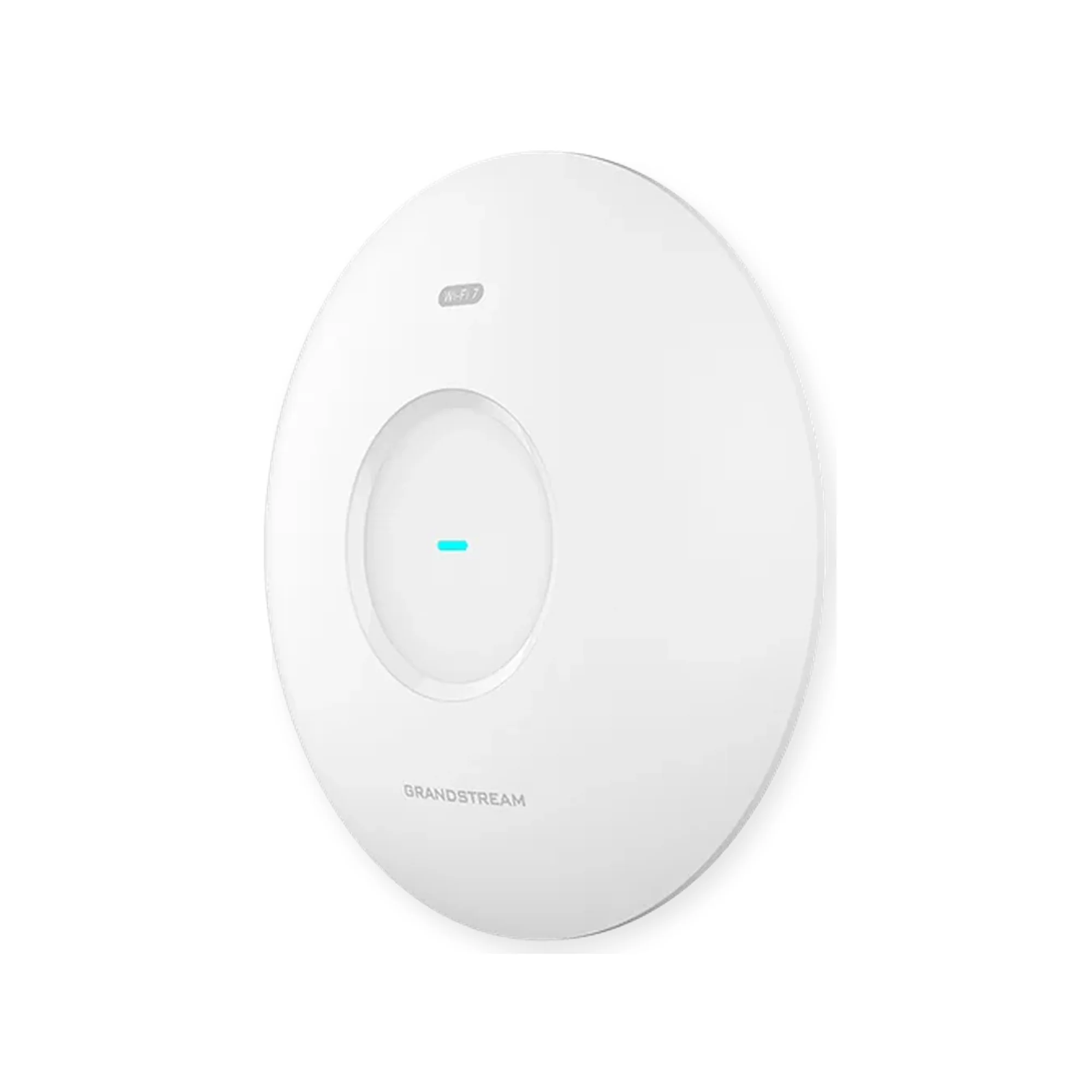
Official product imageGWN7670
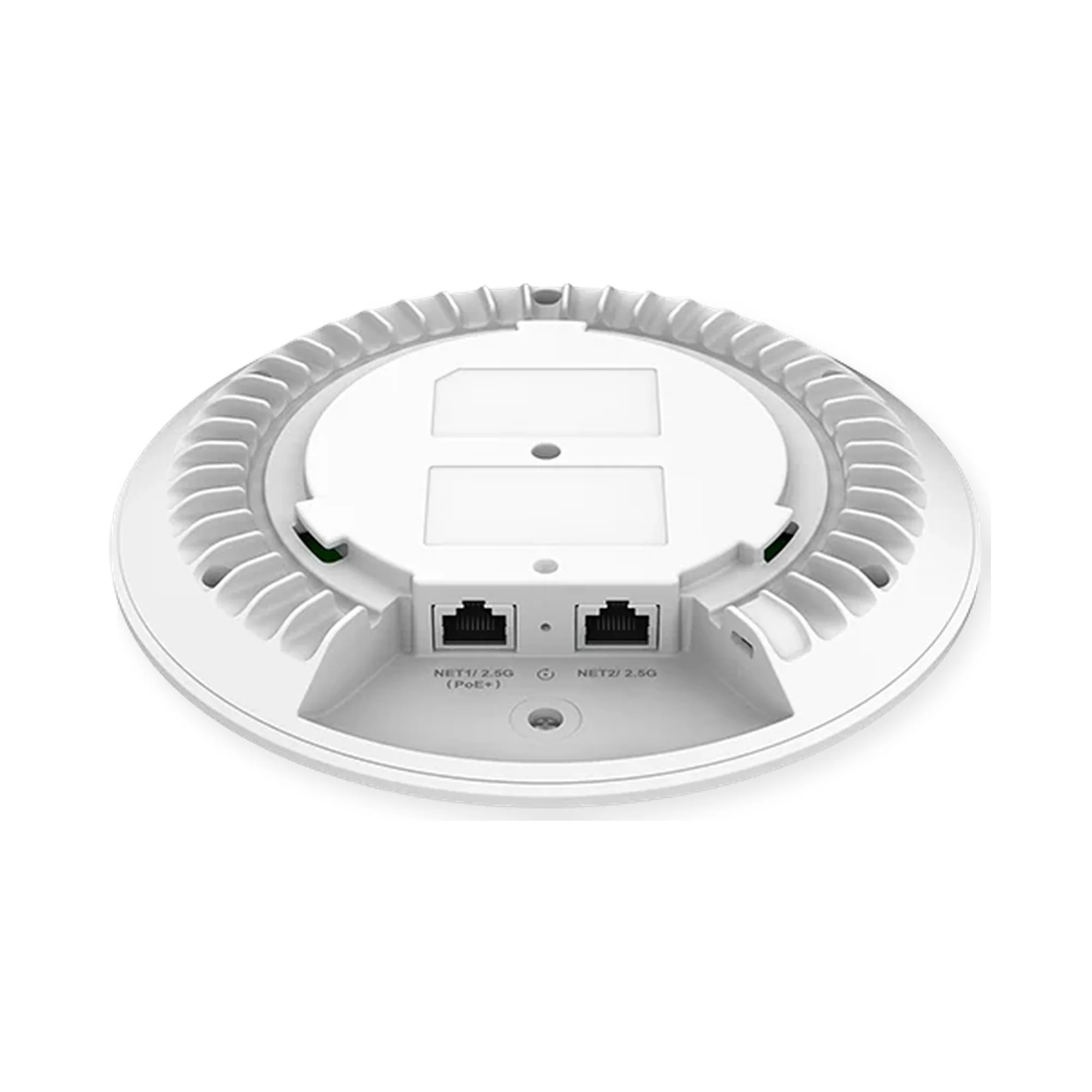
Ports and mounting base
Official view showing the two 2.5GbE ports and PoE+ input.
Official view showing the two 2.5GbE ports and PoE+ input.
A dual-band indoor Wi‑Fi 7 access point for business and medium-density sites, with up to 3.6 Gbps aggregate wireless throughput, two 2.5GbE ports, and flexible centralized management.
Operates on 2.4 and 5 GHz with next-generation Wi‑Fi 7 features, without a 6 GHz radio.
Up to 688 Mbps on 2.4 GHz and 2882 Mbps on 5 GHz.
Supports MLO, Multi-RU, and Preamble Puncturing for efficiency and low-latency applications.
Designed for medium-density business environments with correct RF planning.
Up to 5 Gbps aggregate wired capacity to reduce uplink bottlenecks.
Embedded controller, GDMS Networking, GWN Manager, WPA3, and secure boot.
| Standard | Wi‑Fi 7 / IEEE 802.11be |
|---|---|
| Bands | 2.4 GHz and 5 GHz |
| MIMO | 2×2:2 on each radio |
| Wireless throughput | Up to 3.6 Gbps aggregate |
| Wired capacity | Up to 5 Gbps through two 2.5GbE ports |
| Clients | Up to 256 concurrent clients |
| SSIDs | 32 total, 16 per radio |
| Power | 802.3af/at PoE/PoE+; 14.5 W maximum consumption |
| Management | Embedded controller for up to 50 local APs, GDMS Networking, and GWN Manager |
| Bluetooth | Bluetooth Low Energy 5.3 |
| Security | WPA/WPA2/WPA3, secure boot, and a unique security certificate |
| Dimensions and weight | 185×185×44.5 mm — 527 g |
| Operating environment | Indoor, 0 to 45°C, 10–90% non-condensing humidity |
Warranty term, regional version, and installation scope are confirmed in the final quotation, with configuration, testing, and handover available according to the project scope.
No. This model is dual-band and operates on 2.4 and 5 GHz; it must not be described as Wi‑Fi 6E or tri-band.
No. It includes an embedded controller and can also be managed through GDMS Networking or GWN Manager.
Yes. It supports 802.3af and 802.3at and adapts its power use to the available PoE source.
That is a nominal open-area figure; walls, interference, and placement reduce actual coverage.
Send the site area, user count, application types, and available switch details so the wireless design can be checked before deployment.